Commission for Theological Education in the Anglican Communion (CTEAC) |
Welcome to the November 2025 edition of the CTEAC Resources Bulletin. A downloadable version of this month’s bulletin is also available. |
Living Postcolonial AnglicanismProspects for a Polycentric Anglican CommunionReporting on a symposium about the possibilities and challenges of a postcolonial, polycentric Anglican Communion convened by Dr. Kwok Pui Lan and the Rt. Rev. Ian T. Douglas, PhD, November 6-8, 2025, in Atlanta,
USA. |
With a majority of Anglicans now living in the global South the churches of the Anglican Communion are undergoing significant transformation. This symposium was a unique opportunity, outside the regular meetings of the Anglican Communion, to critically examine the evolving cultural dynamics and power structures within this transformation. Hosted by the
Episcopal Divinity School, it brought together established and emerging leaders from across the global Anglican Communion with U.S.-based clergy and lay leaders. Over three days they learnt more about the possibilities and challenges of an increasingly postcolonial and polycentric Anglican Communion. Those taking part appreciated multiple differences of culture, language and tradition across the Anglican Communion while also experiencing a deep sense of unity and common participation in God’s
mission as Anglicans. Those attending came from Africa, Asia, Latin America, Oceania and Europe as well as North America, including from indigenous communities. They represented a range of church traditions and institutions including seminaries, mission agencies and the Anglican Communion Office. Together they created a safe and appreciative space in which to listen and speak about the
need for resistance to colonial structures and mindsets which are still present in their churches and which disempower those on the margins. The discussion was sometimes uncomfortable and unsettling, not least for those from the Church of England and the Episcopal Church, churches which in the past have done much to extend colonialism and the extraction of wealth by the colonisers. However, through the
honesty of this discussion a fresh commitment and hope in the possibility of de-centred sites of authority and leadership was engendered. In the words of one participant, the Goliath of colonialism was named so that it could be resisted. The symposium showed the need to lament past sins and also, as Kwok Pui Lan argued, that the church can change because God is with us. In the words of another participant, it allowed a postcolonial Anglicanism to be midwifed into being. This
would be on the basis of its ecclesiology with its embodiment of a ‘via media’ between centre and periphery, the metropole and the margin, the local and global. A set of actions were drawn up at the end, including to develop a tool kit for local churches to address colonialism, also to foster mentoring especially for women, and to disseminate the insights and imperatives of all this through networks
such as the Commission for Theological Education in the Anglican Communion, the Council for World Mission and USPG. The Episcopal Divinity School was thanked warmly for convening the symposium and bringing participants together from across the world. The symposium also celebrated the forthcoming release of a new collection of essays by global Anglican leaders, Living Postcolonial Anglicanism: Prospects for
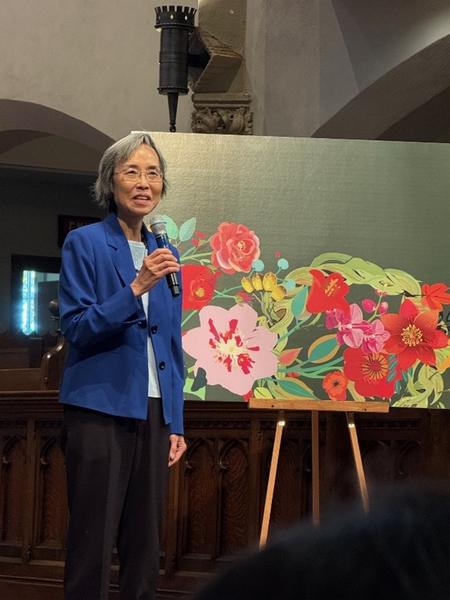
a Polycentric Anglican Communion (Bloomsbury, 2025), edited by Kwok Pui Lan and Bishop Ian Douglas, which follows their widely read volume of 2001, Beyond Colonial Anglicanism Photo caption: Dr Kwok Pui Lan addressing the symposium with an image of flowers from across the world representing the diversity of the Anglican Communion |
Formation for Enabling MinistryAn Invitation to join an Online Learning CommunityWhen we train church leaders, we often focus on things like preaching, leading worship, and running church programmes – all essential for our time gathered together as church. But the mission doesn’t stop there. How do we equip leaders to empower people for their time scattered in the world – joining God’s mission at work, with family, doing hobbies, at the
pub? Church leaders are called to make disciples who follow Jesus in every part of life. Those of us who train them need to make sure they’re equipped for that whole-life disciple-making mission – not just for gathered church activities. If you’re a theological educator in a seminary, offer denominational training to
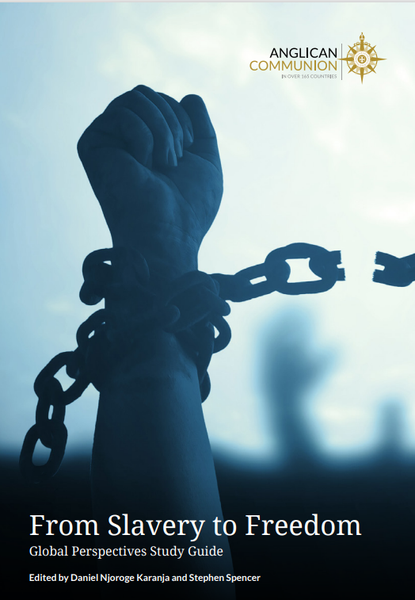
church workers in your area, or teach leaders in your own church, this community of practice will help you do just that. The programme will require roughly 50 hours of self-directed study with the aim of completing it by the end of April 2026. You can explore the programme here, by clicking on the guest access button. Full details of the learning community are here. To register, email jo.trickey@licc.org.uk. From Slavery to Freedom: Global Perspectives Study GuideInvitation to an online book launchOn Tuesday, 2 December 2025, the International Day for the Abolition of Slavery, The Episcopal Church Office of Global Partnerships in collaboration with the Commission for Theological Education in the Anglican Communion will be launching the publication From Slavery to Freedom: Global Perspectives Study Guide. Contributors will be present to talk about their chapters including the Most Revd Howard Gregory, the Most Revd John Holder, the Revd Dr Katherine Grieb, the Revd Dr Pervaiz Sultan, the Revd Dr Daniel Karanja and the Revd Dr Stephen Spencer. The book launch will last one hour. You are warmly invited to attend this important
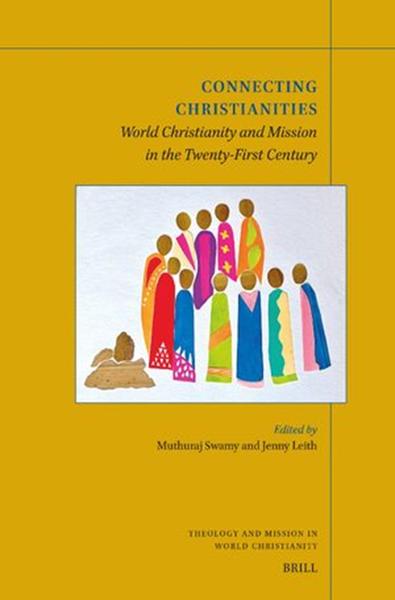
event. Connecting ChristianitiesWorld Christianity and Mission in the Twenty-first Century |
How to understand and practice World Christianity and mission in the twenty-first century? What does World Christianity mean to an ordinary Christian in their everyday life? In what ways do Christians belong to a global Christian community? This book engages with these questions by offering a critical perspective on prevalent notions of World Christianity. In a
context where World Christianity is often understood as an effort to make the whole world Christian or as Christianity of the global south, this book emphasises the importance of global connections in Christianity. This way of thinking about World Christianity not only opens up new horizons in scholarship but also has implications for the practice of everyday Christian mission in the contemporary context: through building connections with fellow Christians from different denominational and
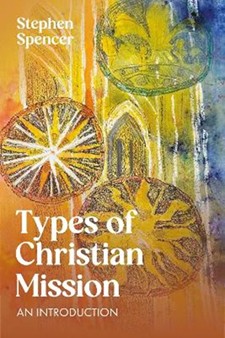
geographical backgrounds, with people of other religions and traditions, and with the wider society. Types of Christian MissionAn Introduction |
Stephen Spencer, SCM Press, published November 2025 Of all areas of theology, it is perhaps our understanding of mission which has changed the most in the last twenty years. Seeking to acknowledge this change, Types of Christian Mission: An Introduction presents students and other readers with a vital introduction to the challenges, complexities, debates and contexts of contemporary
missiology. The author provides an accessible mapping of the major types of Christian mission down through church history, viewing each within their historic contexts, and featuring a comparison of each type of mission with key principles from Jesus’ Galilean ministry, as a way of assessing strengths and weaknesses of each type. |
|
|